A Toddler Suffered a Stroke and Needed a $4,000 Mobility Trainer. Here’s How College Students Built 1 for Much Less

Cal Poly students spent 285 printing hours customizing a mobility trainer for a toddler whose insurance covered one device every five years.

Last year, a toddler in San Luis Obispo suffered a stroke that caused a traumatic brain injury and left him with limited mobility. His mother, Caitlin Bledsoe, said insurance covered one mobility device every five years, but her son would outgrow anything sized for a 2-year-old long before then.
Weighing the cost of replacing it herself, she told Mustang News the prospect was “just insane to me.”
A commercially manufactured mobility trainer, the kind
A commercially manufactured mobility trainer, the kind of device that helps a child with limited motor function learn to sit or stand, could have cost her family up to $4,000 a year out of pocket. Tikkun Olam Makers (TOM) has spent more than a decade trying to close this gap, and it now has a version that costs between $200 and $250, thanks to 3D printing.
The nonprofit’s founder and president, Gidi Grinstein says that figure “can vary depending on location, printer availability, and filament costs,” but he put the broader savings at 80 percent to 99 percent below market alternatives, where a market alternative exists at all. In some countries, he said, a comparable device is available on Amazon; in others, he said, TOM’s device is the only one on the market.
The daily digest for entrepreneurs and business leaders
An Inc.com Featured Presentation
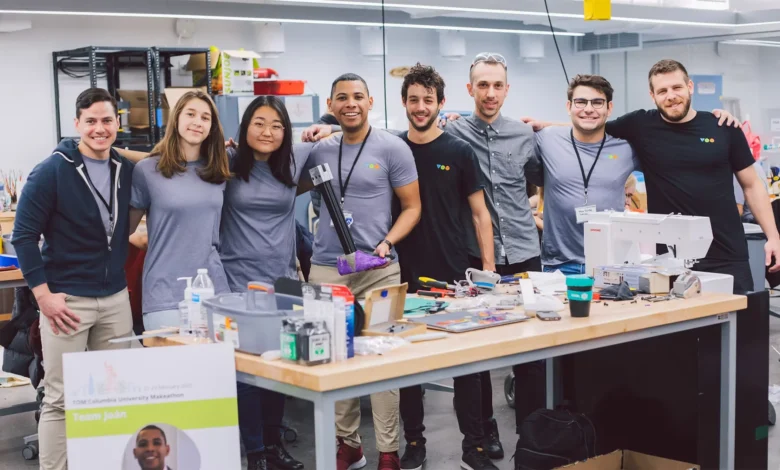
In searching for alternatives, Bledsoe discovered Cal Poly’s TOM chapter on Facebook. Led by mechanical engineering junior Noah Alloun and project manager Eitan Ziegel, the club customized a 3D-printed mobility trainer for the toddler, a build that ran 285 hours across two sessions before eight members assembled the finished chair in February with the family watching.
That figure matches what Grinstein described as standard
That figure matches what Grinstein described as standard for the design. “The standard production time for a 3D-printable mobility chair ranges from 208 to 285 hours of 3D printing, depending on the type of filament used, so the project progressed according to schedule,” he said. Alloun said the payoff was watching the boy get pushed around in his new chair, smiling.
How TOM Cuts the Cost of Assistive Devices
TOM was founded in 2014 as a partnership between the Reut Group and the Charles and Lynn Schusterman Family Foundation’s ROI Community. The nonprofit network counts more than 5000 volunteer members across 35 countries, and says its network has produced over 200,000 devices.
Source: www.inc.com